

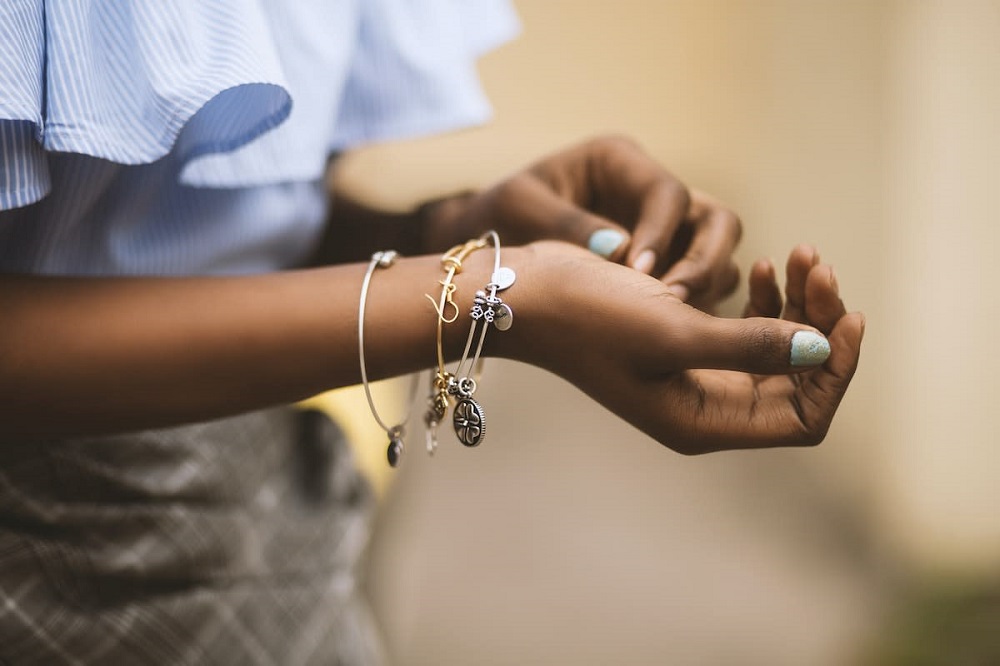
For decades, one of the most rigid rules in the fashion playbook was the strict separation of metals. Conventional style dictated that you had to choose a side: you were either a gold person or a silver person, and the two should never cross paths within a single outfit. Wearing a gold necklace with a silver watch was viewed as a careless styling mistake rather than a deliberate choice.
Today, that old rule has been completely dismantled. Modern styling embraces contrast, texture, and individuality, turning the old prohibition into a powerful tool for self-expression. Mixing metals creates a layered, dynamic look that feels contemporary and effortlessly chic. However, successfully blending gold and silver requires more than just grabbing random pieces from your jewelry box. To achieve a look that feels intentional and balanced rather than chaotic, you must understand the core principles of contrast, proportion, and visual anchoring.
The Philosophy of the Mixed Metal Trend
The shift toward mixed metals reflects a broader movement in fashion away from hyper-coordinated, catalog-like dressing and toward personal curation. When you wear only one metal tone, your look can sometimes lean predictable or overly formal. Introducing a second metal tone immediately injects a sense of ease and visual texture.
The secret to mastering this aesthetic lies in intentionality. If an outfit features an accidental mixture of metals, it looks disorganized. If it features a deliberate arrangement, it looks sophisticated. The goal is to make it clear to the observer that you paired these pieces on purpose. When done correctly, mixing metals allows you to maximize your wardrobe, break free from seasonal styling limitations, and transition seamlessly between casual and formal environments.
Core Rules for Blending Gold and Silver
To build a cohesive mixed metal look, you need a baseline strategy. These four foundational principles will help you navigate the process without feeling overwhelmed by options.
Establish a Dominant Tone
Attempting to mix metals in an exact fifty-fifty ratio often creates visual conflict, as the two tones compete for dominance across your silhouette. Instead, utilize the seventy-thirty rule. Select one primary metal to act as the foundation of your outfit, representing roughly seventy percent of your jewelry and hardware. Use the second metal as a strategic accent to break up the monotony. For example, you might wear a dominant collection of sleek silver rings and a thick silver chain, accented by a single delicate gold pendant and a gold watch.
Focus on Style and Vibe Consistency
While you are mixing the colors of the metals, you should keep the underlying design style consistent. Forcing two completely different design aesthetics together while also mixing colors creates too much friction.
-
Minimalist and Geometric: Pair clean, structural silver bands with similarly sleek, modern gold hoops.
-
Vintage and Ornate: Combine antiqued, blackened silver filigree with textured, brushed yellow gold.
-
Bohemian: Layer delicate, thin gold chains with oxidized silver charms and raw gemstones.
Use a Bridge Piece
The easiest way to signal that your mixed metal look is intentional is to use a bridge piece. A bridge piece is a single item of jewelry that natively incorporates both gold and silver within its design. This could be a two-tone luxury watch, a ring featuring intertwined bands of different metals, or a woven chain necklace. When you include a bridge piece, it instantly anchors the rest of your separate gold and silver items, pulling the entire ensemble together into a unified theme.
Group by Proximity
Distributing your mixed metals evenly across your entire body can dilute the impact of the styling choice. Instead, create localized clusters of mixed metals. Stacking multiple rings of alternating colors on one hand, or layering chains of different lengths and tones around your neckline, creates concentrated zones of visual interest. This technique draws the eye to specific focal points rather than scattering attention everywhere at once.
Managing Hardware Beyond Jewelry
A common pitfall when mixing metals is focusing exclusively on jewelry while ignoring the functional hardware built into your clothing and accessories. True balance requires looking at the entire outfit as a complete canvas.
Take note of the visible hardware on your handbag, such as zippers, clasps, and chain straps. Consider the buckles on your shoes, the grommets on your belt, the buttons on your blazer, and even the frames of your sunglasses. If you are wearing a black leather belt with a massive, shiny silver Western buckle, throwing on a delicate all-gold jewelry look can create an awkward disconnect.
To solve this, apply the dominant tone rule here as well. If your favorite daily handbag has prominent gold zippers and rings, let gold be your dominant metal for the day, and use silver jewelry to create your accents. By factoring your accessories into the equation, you prevent your clothing from clashing with your jewelry.
Layering Techniques for Specific Categories
Different areas of the body require different approaches to achieve a balanced blend. Here is how to apply mixed metal principles to necklaces, rings, and wrists.
Necklaces: The Cascade Effect
When layering necklaces of different metal tones, varying the lengths and weights of the chains is critical. If you layer a gold chain and a silver chain of the exact same length and thickness, they will tangled together and create a messy, unreadable blur. Instead, create a cascading effect. Start with a short, delicate silver choker, add a medium-length gold chain with a structural pendant, and finish with a longer, heavier silver rope chain. The variance in length allows each metal to shine independently while contributing to a layered whole.
Rings: The Alternating Stack
The hands offer the perfect playground for experimentation. You can mix metals across different fingers or stack them high on a single finger. For an effortless ring stack, alternate your metals sequentially. Place a thick silver band at the base, slide a thin gold spacer ring into the middle, and top it with a delicate silver midi ring. Keeping the textures relatively uniform helps the different colors look cohesive.
Wrists: The Timepiece Anchor
Your watch is the ultimate anchor for wrist styling. If you own a two-tone watch, your job is already done; you can freely surround it with bracelets of either color. If you wear a solid silver watch, try pairing it with a thin, minimalist gold cuff sitting just above the watch face. This breaks up the solid block of silver without overwhelming the clean lines of your timepiece.
Frequently Asked Questions
Can I mix rose gold with traditional yellow gold and silver?
Yes, you can introduce rose gold into the mix, but doing so increases the complexity of the outfit. To keep it grounded, treat rose gold as your accent tone within a dominant yellow gold or silver framework. Combining all three metals works exceptionally well if you have a single tri-color bridge piece, such as a braided rolling ring, to establish the palette from the beginning.
How do fabric colors affect a mixed metal combination?
The color of your clothing provides the backdrop for your metals. Neutral fabrics like black, white, charcoal, and cream are highly forgiving and allow mixed metals to pop cleanly. If you are wearing warm-toned clothing like terracotta, olive, or mustard, let yellow gold be your dominant metal. For cool-toned fabrics like navy blue, emerald green, or icy gray, lean heavily into silver as your base tone.
Does the finish of the metal matter when mixing gold and silver?
The finish matters immensely for the overall vibe of the outfit. Highly polished, shiny metals create a sleek, high-contrast look that feels formal and evening-ready. Matte, brushed, or satin finishes diffuse the light and offer a softer, more casual appearance. For the most balanced look, try to keep the finishes consistent; avoid pairing a highly reflective, mirror-finish silver with a deeply distressed, antiqued gold.
Should my earrings match my necklace when mixing metals?
They do not need to match perfectly, but they should balance each other out. If you are wearing large, dramatic silver statement earrings, keep your necklace minimal, perhaps opting for a thin gold chain, or skip the necklace entirely and move your mixed metal focus down to your rings and bracelets to avoid crowding the face.
Is it okay to mix real gold and silver jewelry with costume jewelry?
Yes, you can absolutely blend fine jewelry with high-quality fashion or costume jewelry. The key is ensuring that the costume pieces do not look overly synthetic or cheap next to your real metals. Avoid costume pieces with unnatural, hyper-bright yellow coatings or plastic-like finishes, as the contrast with genuine precious metals will be too stark.
How do skin undertones factor into wearing mixed metals?
Traditionally, cool undertones were told to wear silver, and warm undertones were told to wear gold. Mixing metals completely bypasses this limitation. By adopting a mixed approach, you can place the metal that flatters your natural skin undertone closest to your face as the dominant piece, while incorporating the contrasting metal further away on your wrists or fingers.
Can I mix chunky silver hardware with delicate gold jewelry?
You can, provided there is a clear sense of proportion elsewhere in the look. If you are wearing a heavy leather jacket with chunky silver zippers, delicate gold rings might get visually swallowed up. To balance the heavy silver hardware, opt for slightly thicker gold pieces, like a medium-weight herringbone chain or a substantial gold signet ring, so the jewelry can hold its own against the clothing.

Comments are closed.